
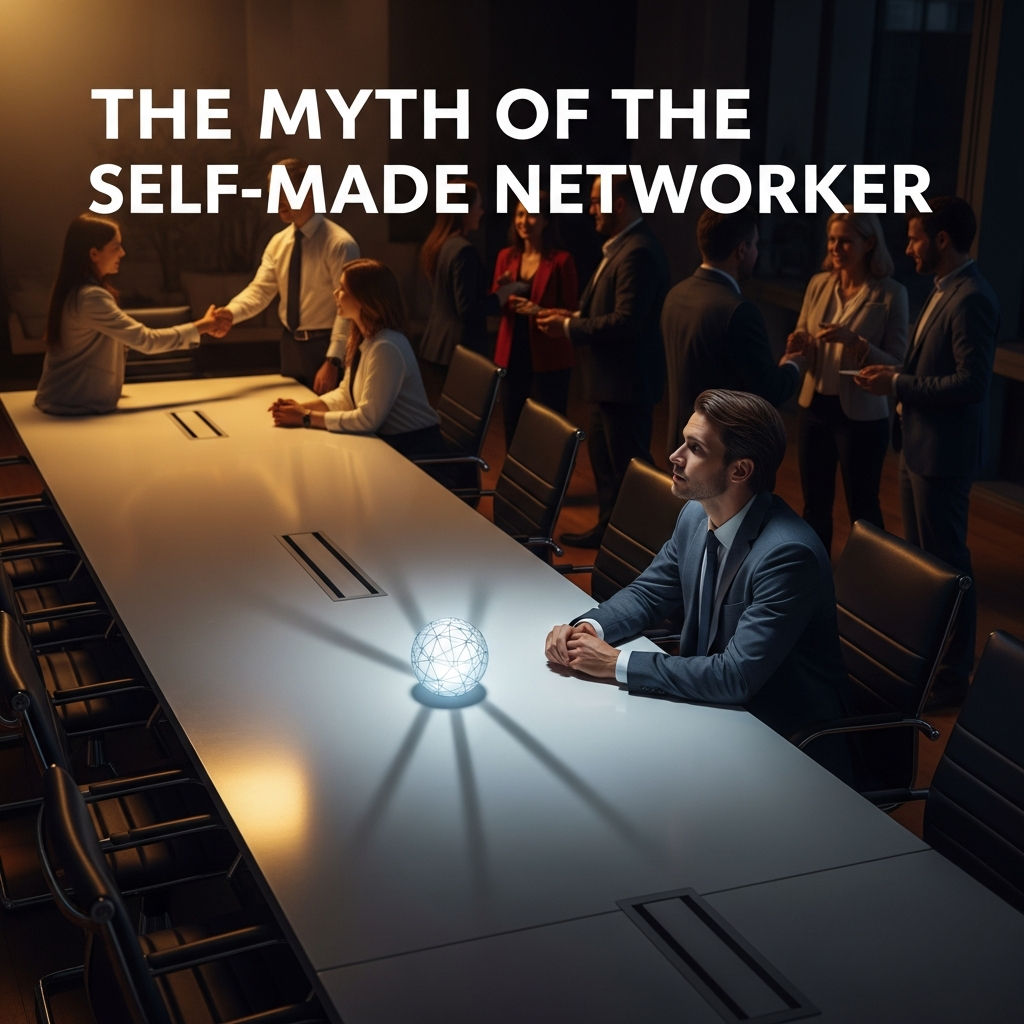
The Myth of the Self-Made Networker: Why True Success is a Collective Effort
In the world of business and professional development, we are obsessed with the narrative of the “self-made” individual. We celebrate the entrepreneur who started in a garage, the CEO who rose from an entry-level position, and the influencer who built a following from zero. However, when we apply this “lone wolf” logic to professional relationships, we encounter a glaring fallacy: the myth of the self-made networker.
The idea that anyone can build a powerful, influential network entirely on their own—without the help of mentors, existing social capital, or strategic introductions—is not only unrealistic but counterproductive. Networking, by its very definition, requires others. To claim one is “self-made” in a field that relies entirely on the cooperation of others is a paradox. Understanding why this myth exists, and why debunking it is essential for your career, is the first step toward building genuine, sustainable professional relationships.
The Illusion of the “Bootstrap” Mentality in Networking
The “bootstrap” mentality suggests that with enough grit and determination, you can pull yourself up into any circle of influence. While hard work is a prerequisite for success, it is rarely the sole catalyst. When we look closely at high-profile “self-made” networkers, we often find a hidden infrastructure of support that paved their way.
This infrastructure often includes:
- Educational Pedigree: Attending a prestigious university provides an immediate, “pre-packaged” network of high-achieving peers and alumni.
- Geographic Advantage: Being born in or moving to a hub like Silicon Valley, New York, or London provides accidental “collision points” with industry leaders.
- Family Legacy: Even if a family isn’t wealthy, a parent’s professional reputation can act as a silent door-opener for the next generation.
When we ignore these factors, we create an unfair standard for those who truly start from scratch. By acknowledging that no one is truly self-made, we can focus on the real mechanics of how social capital is actually built and shared.
Understanding Social Capital: Inherited vs. Acquired
To debunk the myth of the self-made networker, we must understand Social Capital. Much like financial capital, social capital is the value derived from your social networks. It consists of the information, trust, and cooperation available to you through your connections.
Inherited Social Capital
Some individuals enter the professional world with inherited social capital. They have “warm leads” from day one. Their “self-made” journey starts at the 50-yard line. This doesn’t mean they don’t work hard, but it does mean their networking efforts yield faster results because the foundation of trust was already laid by someone else.
Acquired Social Capital
For those without inherited advantages, social capital must be acquired. This is where the “self-made” myth feels most real, yet even here, it is a collaborative process. You cannot “acquire” a connection without the other person’s consent. Every step forward in an acquired network is the result of someone else deciding to take a chance on you, offer an introduction, or share a piece of advice.
The Role of “Super-Connectors” and Gatekeepers
If you look at any successful professional, you will likely find a “Super-connector” in their history—a person who introduced them to three or four key people who changed the trajectory of their career. These gatekeepers are the true engines of networking success.
The myth of the self-made networker ignores these pivotal moments of grace. No matter how many LinkedIn requests you send or how many coffee chats you request, your network only expands when a gatekeeper decides to open the door. Acknowledging these individuals isn’t a sign of weakness; it’s an exercise in professional gratitude and accuracy.
Mentorship vs. Sponsorship: The Invisible Boost
Often, the “self-made” narrative survives because we confuse mentorship with sponsorship. While a mentor provides advice, a sponsor uses their political capital to advocate for you behind closed doors.
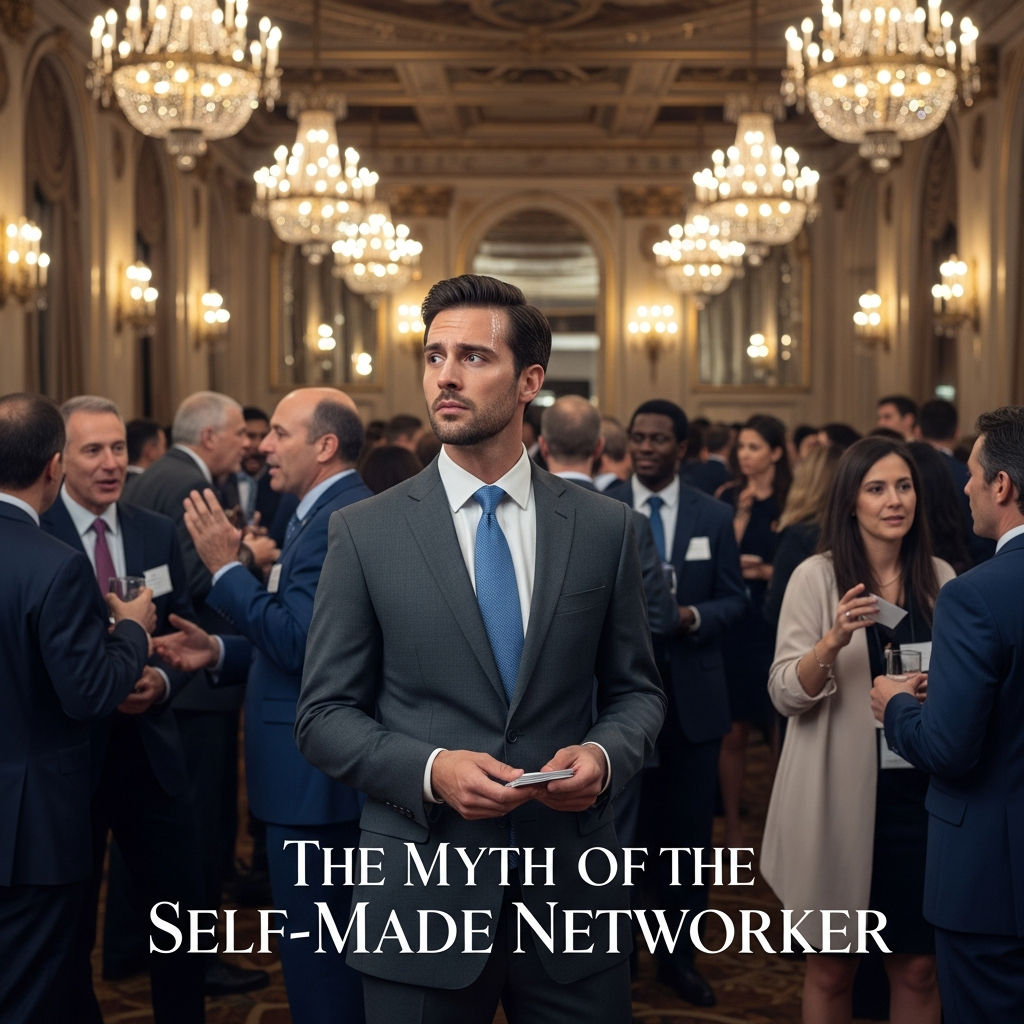
The self-made myth suggests we climb the ladder hand-over-hand. The reality is that someone at the top is usually reaching down to pull. Without a sponsor to vouch for your character or competence in rooms you haven’t yet entered, “self-made” growth hits a glass ceiling very quickly. Professional networking is less about who you know, and more about who is willing to put their reputation on the line for you.
Why the “Self-Made” Label Hurts Your Networking Strategy
Clinging to the “self-made” identity can actually hinder your ability to grow your network effectively. It creates several psychological and strategic barriers:
- Reluctance to Ask for Help: If you believe you must be self-made, you may view asking for an introduction as a sign of failure rather than a standard business practice.
- Lack of Reciprocity: Self-made narratives tend to be ego-centric. True networking is ego-decentric. It’s about how the “we” can thrive, not just the “I.”
- Authenticity Gaps: People are drawn to vulnerability and honesty. When you pretend you did it all alone, you appear unapproachable and untrustworthy to potential high-level connections.
How to Build a Network Without the “Self-Made” Delusion
If we accept that we cannot be self-made networkers, how should we approach professional relationship building? The shift is from “building a network” to “joining a community.”
1. Audit Your Existing Support System
Recognize the people who have already helped you. Whether it was a teacher, a former boss, or a friend who looked over your resume, acknowledge that your current position is a result of their investment. This humility makes you a more attractive connection to others.
2. Focus on “Nodes” Rather Than Individuals
Instead of trying to meet everyone, find the “nodes”—the people who are at the center of the communities you want to join. Approach them not with a request for yourself, but with a question of how you can contribute to their ecosystem.
3. Be Transparent About Your Intentions
The most effective networkers are honest about their goals. They don’t pretend they don’t need help. They say, “I am looking to grow in this area, and I’ve been told you are the best person to learn from.” This honesty debunks the “self-made” facade and invites others to become part of your story.
4. Practice Radical Reciprocity
Since you know you didn’t get where you are alone, make it your mission to ensure others don’t have to either. By becoming a connector yourself, you reinforce the idea that networking is a collective resource. The more you give away your social capital, the more it tends to return to you.
The Power of the “Village” Mentality
In conclusion, the “self-made networker” is a romanticized fiction. Behind every successful entrepreneur is a series of “yeses” from investors, mentors, and peers. Behind every promoted executive is a group of advocates who spoke their name in meetings they didn’t attend.
By letting go of the myth, we free ourselves to build deeper, more meaningful connections. We move away from the transactional nature of “using” people and toward the transformational power of building a community. Success in the modern world isn’t about how far you can go alone; it’s about how many people you can bring with you, and how many people are willing to walk beside you.
The next time you reach a milestone, resist the urge to say you did it on your own. Instead, take a moment to look at the web of relationships that made it possible. That web is your real net worth, and it was woven by many hands—not just yours.