
“`html
The Invisible Leak: Why Your Privacy Isn’t Just Up to You
In the digital age, we are taught to guard our passwords, use two-factor authentication (2FA), and browse via encrypted VPNs. We treat privacy as an individual fortress—a series of walls we build around our personal data. However, there is a fundamental flaw in this logic: privacy is no longer an individual right; it is a collective responsibility. No matter how many security layers you implement, your personal network is likely the biggest hole in your digital defense.
From contact syncing and “shadow profiles” to accidental geotagging and smart home surveillance, the people you trust most—your friends, family, and colleagues—are inadvertently broadcasting your private life to data brokers and tech giants. This article explores why your personal network has become a massive privacy nightmare and what it means for your digital future.
1. Contact Scraping: You Didn’t Sign Up, but Your Data Did
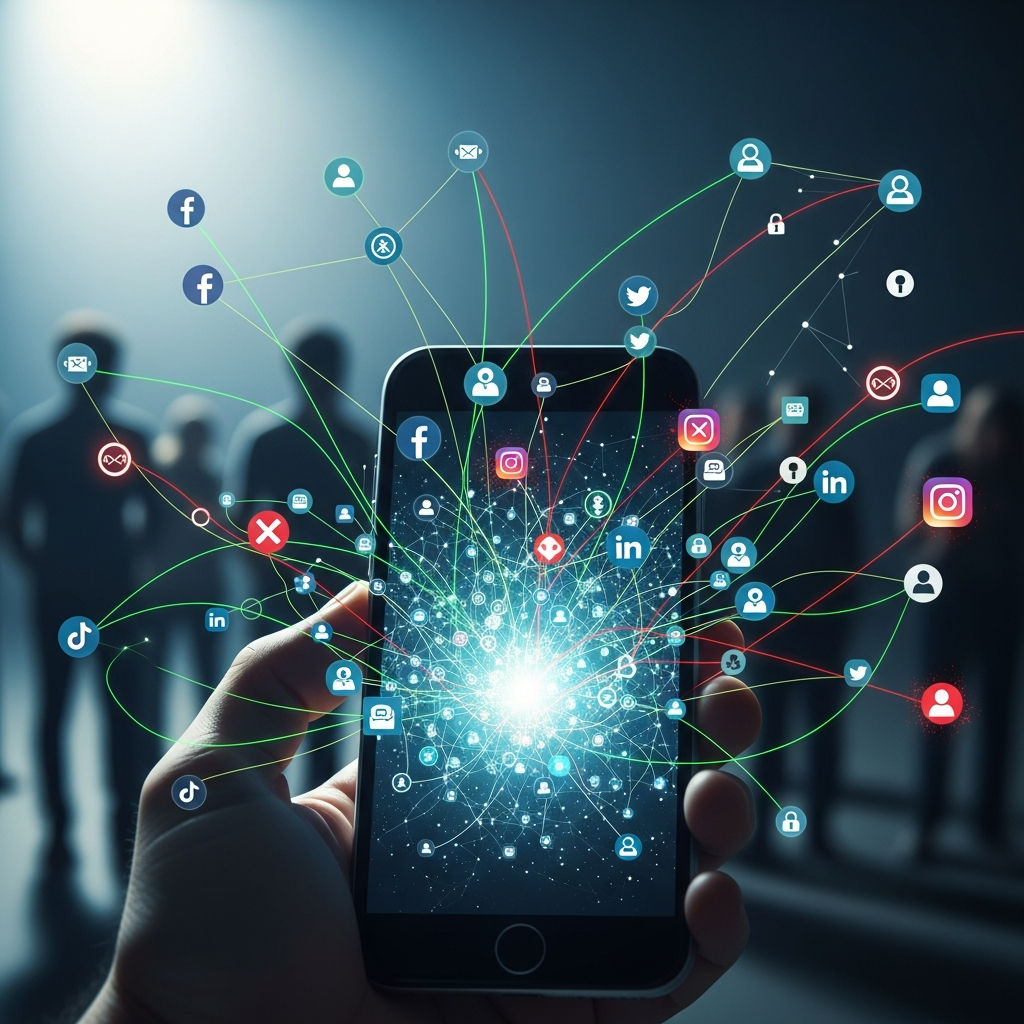
One of the most insidious ways your privacy is compromised is through “contact syncing.” When a friend downloads a new social media app or a “free” utility tool, they are often prompted to “find friends” by uploading their entire contact list. By clicking “Allow,” they have just handed over your name, phone number, email address, and perhaps even your physical address to a third-party server.
The Permission Paradox
The core issue here is that you never gave consent. Your friend gave consent on your behalf. This creates a massive database of “non-users”—people who have never interacted with a specific service but are documented within its systems because their network has shared their details.
- Metadata Mapping: Even if the app doesn’t know what you talk about, it knows *who* you talk to and how often.
- Database Correlation: Data brokers use these contact lists to link your old email addresses to your new phone number, ensuring your “consumer profile” remains updated.
2. Shadow Profiles: The Ghost in the Machine
The term “shadow profile” gained notoriety through investigations into social media giants. A shadow profile is a collection of data about a person who isn’t even a member of a platform. If five of your friends upload their contacts and your name appears in all of them, the platform’s algorithm creates a profile for you.
Because these companies can track web browsing habits through “Like” buttons and tracking pixels across the internet, they can eventually link your browsing behavior to that shadow profile. By the time you finally decide to join the platform, they already know your political leanings, your favorite brands, and your likely location—all thanks to your network.
3. The Smart Home Trap: Being a Guest in a Surveillance State
We are currently living through the “Internet of Things” (IoT) explosion. While you may have chosen not to have a smart speaker or a video doorbell in your home, your friends likely haven’t made the same choice. Entering a friend’s home today is often an exercise in non-consensual data collection.
The Watchful Eyes of IoT
- Smart Speakers: Devices like Amazon Alexa or Google Home are constantly listening for “wake words.” If you are having a private conversation in a friend’s living room, segments of that conversation may be uploaded to the cloud for “quality assurance.”
- Video Doorbells: When you walk up to a friend’s porch, your biometric data (facial structure and gait) is often captured by smart doorbells and stored on corporate servers, often accessible by local law enforcement without a warrant.
- Wi-Fi Tracking: Simply connecting to a friend’s Wi-Fi can expose your device’s MAC address and your browsing history to the ISP or the router manufacturer.
4. Accidental Oversharing and Geotagging
You might be careful about what you post, but your friends might not be. We’ve all been in a situation where a friend posts a group photo and tags everyone involved. While it seems harmless, this is a goldmine for data harvesters.
The Breadcrumbs of Your Life
When a friend tags you at a specific restaurant at a specific time, they are providing a verified data point about your physical location. If they post a photo of you inside your home, they may inadvertently be leaking the layout of your house, the brands of electronics you own, or even a glimpse of sensitive documents on a desk in the background.
Furthermore, many smartphones embed EXIF data into photos, which includes the exact GPS coordinates of where the photo was taken. If a friend uploads an unscrubbed photo of you to a public forum, your exact location is now public record.
5. Social Engineering: Your Network as a Weapon
Cybercriminals understand that you are more likely to trust a message from a friend than a stranger. This makes your personal network the primary vector for “Social Engineering” attacks. If a friend’s account is hacked, the attacker doesn’t just want their data—they want *yours*.
Phishing through Proxy
An attacker may use a friend’s compromised Instagram or WhatsApp account to send you a message like, “Hey, I found this photo of you, is this real?” or “I’m locked out of my account, can you receive a code for me?” Because the message comes from a trusted source, your guard is down. Your friend’s poor security hygiene becomes the gateway for your own identity theft or financial loss.
6. Guilt by Association: Algorithmic Biasing
In the world of Big Data, you are who you know. Machine learning algorithms use “collaborative filtering” to predict your behavior. If the majority of your close network starts searching for “divorce lawyers” or “baby supplies,” algorithms may flag you as someone who is also going through a major life transition.
This can lead to predatory advertising or, in more extreme cases, affect your “social credit” in ways that impact insurance premiums or credit scores. You are being judged not just by your actions, but by the aggregate actions of the people in your contact list.
7. How to Mitigate the Risks (Without Becoming a Hermit)
It is impossible to completely disconnect from the world, but you can take steps to minimize the “network effect” on your privacy. Protecting yourself requires a combination of technical settings and social boundaries.
- Set Social Boundaries: Talk to your close friends and family about your privacy concerns. Ask them not to tag you in photos and to ask before uploading your contact information to new apps.
- Use Alias Emails and Burner Numbers: When giving your information to friends who you know are “app-happy,” consider giving them a secondary VOIP number (like Google Voice) or a masked email address.
- Audit Your Own Permissions: Be the change you want to see. Don’t be the person who leaks your friends’ data. Never allow apps to “sync contacts” unless it is absolutely necessary for the app’s core function.
- Disable Tagging: Adjust your social media settings to require “tag review.” This prevents photos you are tagged in from appearing on your profile without your explicit approval.
- Use Privacy-First Tools: Encourage your inner circle to use encrypted messaging apps like Signal, which do not store metadata or contact lists in a way that is accessible to the company.
The Future of Network Privacy
The “privacy nightmare” of our personal networks is a byproduct of a business model that treats human relationships as raw material for data extraction. As we move deeper into the era of AI and pervasive surveillance, the lines between our private lives and our social circles will continue to blur.
True digital privacy is no longer something you can buy or install; it is a culture we must build. By recognizing that our data is inextricably linked to those around us, we can begin to treat our digital interactions with the caution and respect they deserve. Your network doesn’t have to be a nightmare—but it does require you to wake up to the reality of how connected we truly are.
“`